Why We Ferment Our Dough for 48 Hours
Our menu says it in one line: "48-hour dough". But what does that actually mean, and why should you care? Short answer: time is the cheapest, most important ingredient in a great pizza. Here is the science behind the wait - and why our crust tastes different from the place down the street.
What Happens in the First 12 Hours
When flour meets water, enzymes get to work breaking down starches into sugars. The yeast wakes up and starts eating those sugars, producing carbon dioxide - which is what makes dough rise - and alcohol, which adds flavour. In the first few hours, the yeast is still waking up and the gluten network is just beginning to form. Most fast pizzerias bake their dough at this stage: it rises, but it has not developed any depth of flavour.
Hours 12-24: The Flavour Builds
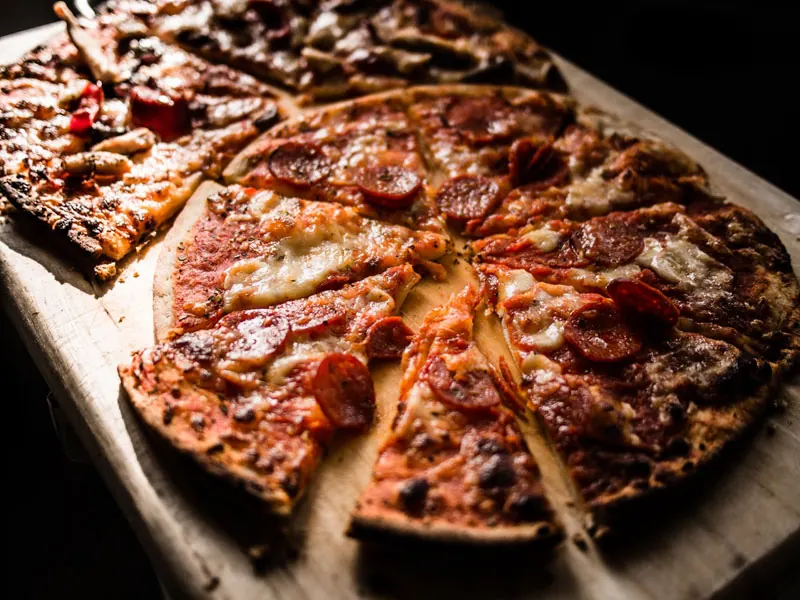
This is where the magic happens. As fermentation continues, bacteria in the dough - the same kinds you find in sourdough - produce lactic and acetic acids. These acids are what give well-fermented bread its complex, slightly tangy flavour and its appetizing aroma. At this stage, the dough also develops a network of air pockets that will become the leopard-spotted bubbles of a proper Neapolitan crust.
Hours 24-48: The Difference You Can Taste
The second day is where most pizzerias stop - and where we keep going. Extended fermentation does three things. First, it continues developing flavour compounds that a short rise simply cannot produce. Second, the gluten relaxes and matures, giving us a dough that stretches paper-thin without tearing and bakes up crispy on the outside, chewy within. Third - and this is the one people notice most - the long fermentation partially breaks down the gluten and proteins, which makes the finished crust noticeably easier to digest. Our customers with sensitive stomachs tell us the difference is real.
The 400°C Finish
All that careful work would be wasted in a home oven. Our wood-fired oven runs at about 400°C, and a pizza spends just ninety seconds inside. The extreme heat flashes the air pockets into a dramatic, charred, leopard-spotted crust while the interior stays soft and steamy. Fast bake, slow dough - that combination is the entire secret, and it cannot be rushed at either end.
Next time you are in, order a Margherita and look at the crust. Every bubble in it is a tiny monument to patience.

Marco Rossi
Marco has been making pizza since he was 14, apprenticing in Naples before bringing his family recipe to New York. He still personally checks every dough that leaves our kitchen.
Julia Feldman
The science section was great - finally someone explains why my home dough tastes flat.
Reply
Marco Rossi
Short proof = flat bread. Time is the cheapest ingredient you can add.
Reply
Kevin Stone
Tried 48h cold fermentation this week. The difference in crust texture is unreal.
Reply
Fatima Al-Sayed
My gluten-sensitive friend handles your pizza well. The slow fermentation really helps.
Reply
Liam Gallagher
Your crust is the reason I keep coming back. Now I know why!
Reply
Rosa Delgado
Can you sell the dough? I would pay good money for that starter.
Reply
Ben Carter
Bookmarked this. Next weekend is dough weekend.
Reply